 Skip to content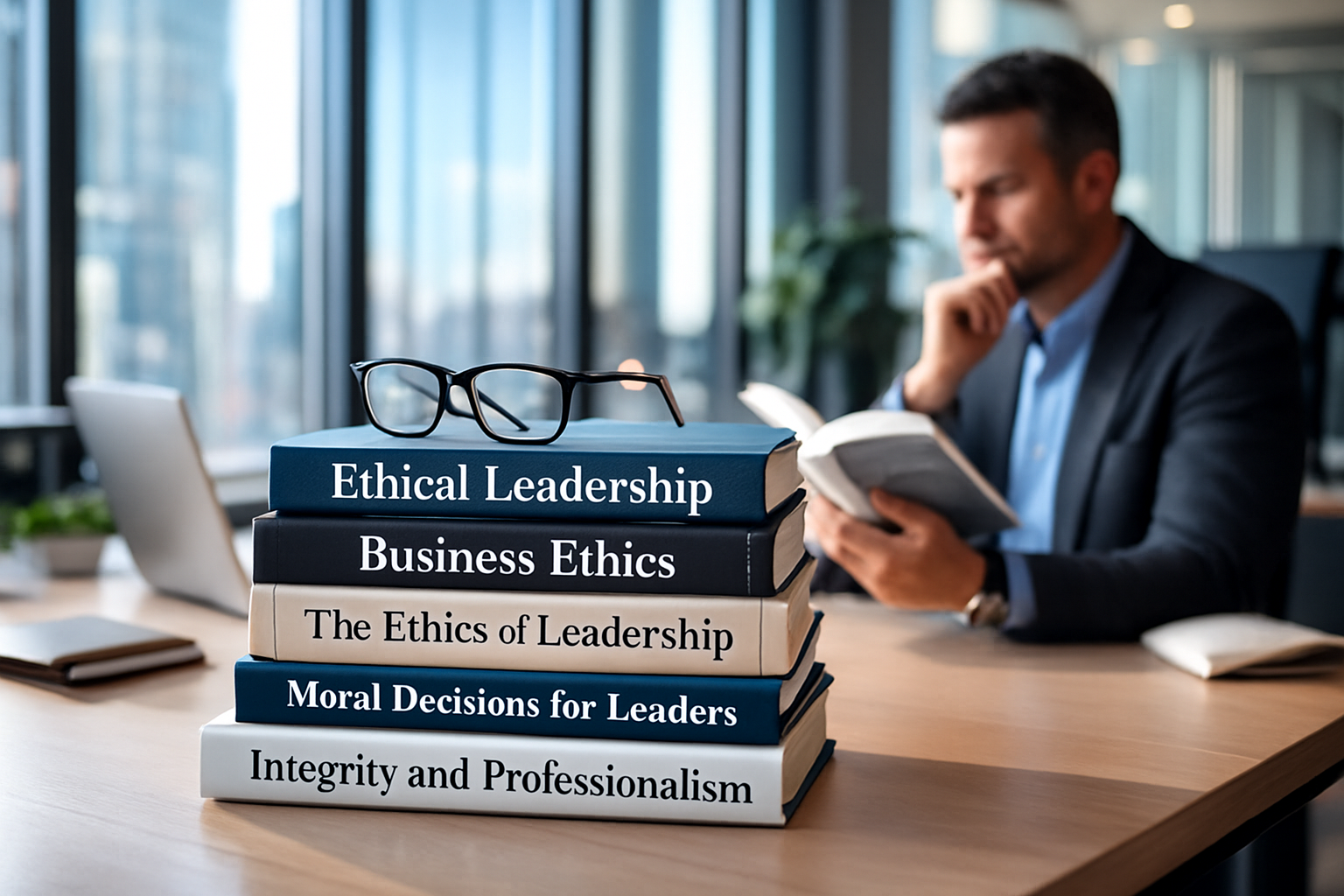
Leadership is tested not only by strategy and performance but by the moral compass guiding every decision in today’s unpredictable business environment. Leaders face increasingly complex questions about fairness, responsibility, and transparency. This is why books on ethics remain essential reading for anyone in a position of authority. These works offer timeless insights while equipping leaders to navigate dilemmas of the modern workplace.
One of the most insightful works in this category is Colin Maxwell’s “Leadership: 21st Century Food for Thought.” Drawing from decades of consulting, teaching, and research, Maxwell presents a comprehensive discussion on leadership that places ethics at its core. His arguments are both pragmatic and principled, making the book a reference point for executives, HR professionals, and students alike.
Ethics as the Bedrock of Leadership
Maxwell insists that ethics is more than a code of conduct tucked away in an employee manual—it must be lived and demonstrated at all levels. He argues that ethical behavior cannot be reduced to signed memos or superficial workshops. Instead, organizations need to embed morality into decision-making, hiring, promotions, communication, and reward systems.
For Maxwell, a leader’s actions set the standard. When leaders embody fairness and honesty, employees feel respected and motivated, leading to stronger performance. Conversely, when ethics are compromised, it erodes trust, damages morale, and ultimately threatens the survival of the organization. This practical emphasis distinguishes his work from many other books on effective leadership skills that often highlight strategy without grounding it in values.
Moral Analysis and Economic Outcomes
One of the most compelling insights in Maxwell’s work is his exploration of moral analysis—the idea that ethics and economics are inseparable. He shows that businesses never operate in a vacuum: organizations that prioritize integrity build long-term stability, while those focused only on short-term profit often collapse under their own practices.
Maxwell challenges purely economic thinking by explaining how profitability without ethical guidance creates risk and instability. He reframes moral principles—such as utilitarian benefits, distributive justice, and contributive liberty—not as abstract philosophy but as practical leadership tools that help prevent exploitation and cultivate environments where both business and society can thrive.
For leaders navigating modern challenges, especially in an AI-driven workplace, these principles are even more essential. As highlighted in “AI, Innovation, and the Future of Work: Practical Insights from Leadership and Management Books,” moral leadership and forward-thinking strategies are the foundation of sustainable success in the emerging world of work.
Ethics Committees and Organizational Trust
A forward-looking recommendation in Maxwell’s book is the creation of ethics committees or judiciary boards within companies. These bodies, he suggests, should monitor behavior, address violations, and reinforce trust. He believes ethical culture cannot be left to chance—it must be deliberately shaped and safeguarded.
This institutional approach reflects his belief that consistency is critical. Leaders cannot expect employees to adhere to high standards if management itself makes exceptions for convenience. Transparency, accountability, and regular review of ethical codes form the backbone of sustainable organizations.
Such guidance positions Maxwell’s book among the best books on ethics, especially for organizations seeking structured methods to build and maintain moral cultures. Other than it, the book contains a series of important topics such as leadership culture, the Japanese method, AI etc.
Aligning Ethics with Corporate Strategy
Another distinctive feature of Maxwell’s thought is his insistence that ethics must align with the broader business plan. He criticizes companies that pay lip service to corporate social responsibility while pursuing contradictory practices. Instead, he advises integrating values with goals, ensuring that success is measured not just in profits but in long-term credibility and social trust.
He further warns against managerial shortsightedness, such as replacing experienced employees with cheaper alternatives, arguing that such decisions harm morale and undermine loyalty. For him, leadership requires balancing efficiency with fairness.
This insistence on long-term vision elevates Maxwell’s writing into the category of books on ethics that matter most for 21st-century leaders.
Challenges in Human Resources and Daily Business Life
Maxwell directly addresses ethical challenges in HR practices—hiring, promotions, training, and performance reviews. He emphasizes that favoritism, discrimination, or lack of transparency in these areas creates toxicity in the workplace. In contrast, ethical management strengthens employee trust, reduces turnover, and fosters innovation.
He also confronts sensitive topics such as sexual harassment, substance abuse, and workplace violence. Rather than treating these as peripheral issues, he highlights them as ethical failures that damage productivity and reputation. Addressing them promptly and fairly is, in his view, not only a legal duty but also a moral obligation of leadership.
For leaders seeking practical guidance, books on ethical leadership such as those by Colin Maxwell show how everyday decisions have a profound moral impact and offer clear insights for applying ethics in real-world leadership.
An Aristotelian Take on Ethics
Maxwell draws from Aristotle, noting that ethical leadership is not about abstract ideals but about consistent actions that reflect fairness, justice, and prudence. He encourages leaders to ask Aristotelian questions: Are rewards distributed fairly? Do leaders act in ways that inspire trust? Does the organization contribute positively to society?
By invoking Aristotle, Maxwell roots his arguments in classical wisdom while applying them to modern dilemmas. This blend of tradition and practicality makes his work resonate with leaders seeking timeless guidance in the books on ethics.
Building a Culture of Respect and Recognition
Recognition and respect are recurring themes in Maxwell’s analysis. He believes that ethical behavior must be rewarded, not just expected. Organizations should celebrate employees who uphold values, just as they recognize those who meet sales or production targets.
This approach transforms ethics from a constraint into a motivator. When employees see ethical behavior leading to rewards, they internalize it as part of their professional identity. This insight aligns Maxwell’s work with the best books on ethics, since it demonstrates how moral reinforcement strengthens personal and organizational discipline.
Ethics in the Age of Remote Work and Technology
Maxwell also addresses the ethical implications of remote work and artificial intelligence. He acknowledges the benefits of digital tools but warns against overlooking privacy, fairness, and trust. For example, excessive monitoring of remote employees can feel punitive, while biased algorithms in AI can perpetuate injustice.
He also explains that leaders must adapt to rapid digital transformation and this idea connects directly to our guide on AI Innovation and the Future of Work, which explains how new technologies are reshaping leadership and management. Maxwell stresses that leaders should use technology with discretion so it protects human dignity rather than undermining it in a world where digital tools now shape how organizations function.
Beyond Maxwell: Other Essential 21st-Century Books on Ethics
While Maxwell’s book offers a comprehensive exploration, leaders can deepen their understanding of ethics by consulting other modern classics. To go beyond simply knowing which books to read, leaders can craft a strategic reading plan using top leadership books, turning knowledge into practical growth. For more insights on ethics, here are three bestselling works that have shaped 21st-century leadership thought:
-
A Higher Loyalty: Truth, Lies, and Leadership by James Comey
Former FBI director James Comey reflects on integrity and decision-making under pressure. From prosecuting the Mafia to leading national security investigations, Comey’s experiences highlight the tension between political power and ethical duty. His narrative demonstrates how truth and loyalty, when properly balanced, define leadership at the highest levels.
-
Principles: Life and Work by Ray Dalio
Dalio, founder of Bridgewater Associates, presents a philosophy of “radical transparency” and “radical truth.” He argues that organizations thrive when they adopt clear principles guiding every decision. With practical lessons from finance and management, Dalio shows how ethical consistency can produce both trust and exceptional results.
-
Ethics 101: What Every Leader Needs to Know by John C. Maxwell
John Maxwell simplifies ethics to one timeless principle: the Golden Rule. His book demonstrates how treating others as you wish to be treated builds stronger organizations. Through real-world stories and business dilemmas, he shows that ethics is not only the right path but also the most profitable one in the long run.
Conclusion: The Indispensable Role of Ethics in Leadership
The 21st century presents leaders with extraordinary challenges: technological disruption, globalization, workplace diversity, and volatile economic cycles. Yet, as Colin Maxwell and other thought leaders emphasize, the foundation of effective leadership remains unchanged—ethics.
By embedding moral standards into strategy, rewarding integrity, and addressing challenges directly, leaders not only safeguard their organizations but also inspire those they lead. Ethics, far from being an obstacle to success, is the very engine of sustainable growth.
For readers committed to strengthening their leadership, books on ethics like Maxwell’s, alongside works by Comey, Dalio, and John Maxwell, form an indispensable reading list. They remind us that in a world where circumstances evolve quickly, principles remain the anchor.
If you are seeking the best books on work ethics, want guidance, or are exploring the best books on work ethic, this curated list provides both wisdom and practicality. And for anyone interested in ethical leadership, it offers a roadmap for building organizations that endure—not only because they are profitable, but because they are principled.
